Cheri Samba
- margielainparis
- Feb 13
- 2 min read


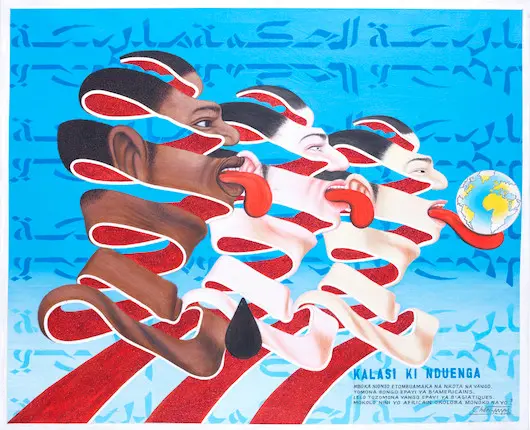
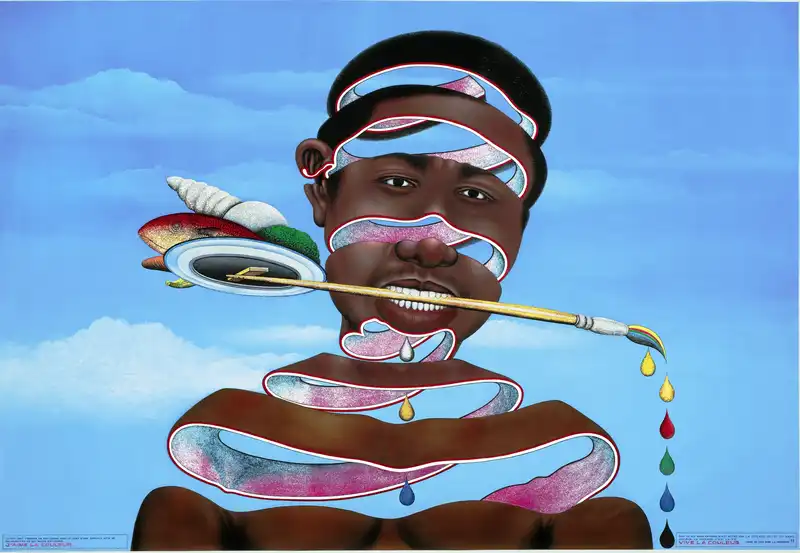
Chéri Samba is a Congolese painter and one of the most influential figures in contemporary African art, born on December 30, 1956, in Kinto M’Vuila in what is now the Democratic Republic of the Congo. He grew up as the eldest of ten children in a family rooted in traditional Kongo culture, but at age 16 he left his village for Kinshasa, the capital, to earn a living as a sign painter — a formative experience that brought him into close contact with visual communication, bold graphic styles, and fellow self-taught artists like Moké and Bodo.
In the mid-1970s Samba opened his own studio and began illustrating comic strips for Bilenge Info, drawing on this experience to develop a signature style that combined vivid painting with text and narrative “word bubbles” borrowed from comics. This innovative approach — often placing himself within his works as a kind of “reporter” — allowed him to explore deeply social, political and everyday themes, from inequality and corruption to gender, illness, and popular culture, in ways that were visually striking and intellectually engaging.
Samba’s work brought him international prominence when he was included in the landmark 1989 exhibition Les Magiciens de la Terre at the Centre Georges Pompidou in Paris, which introduced many Western audiences to contemporary African artists. Since then, his paintings have been acquired by major museum collections including the Centre Pompidou in Paris and the Museum of Modern Art (MoMA) in New York, and he has exhibited widely — from the Venice Biennale to institutions across Europe, North America, and Africa.
Chéri Samba’s impact on the art world lies in his fusion of popular and fine art idioms, his unapologetic engagement with both local Congolese life and global issues, and his role in helping define peinture populaire — art “from and about the people.” His vibrant, text-infused canvases challenged Eurocentric assumptions about African art and opened new avenues for narrative and political expression in painting, making him a pivotal figure in the recognition and appreciation of contemporary African visual culture.



Comments